
The Weather in the Notebook
اضغط على كلمة لترجمتها وحفظها للتدريب.
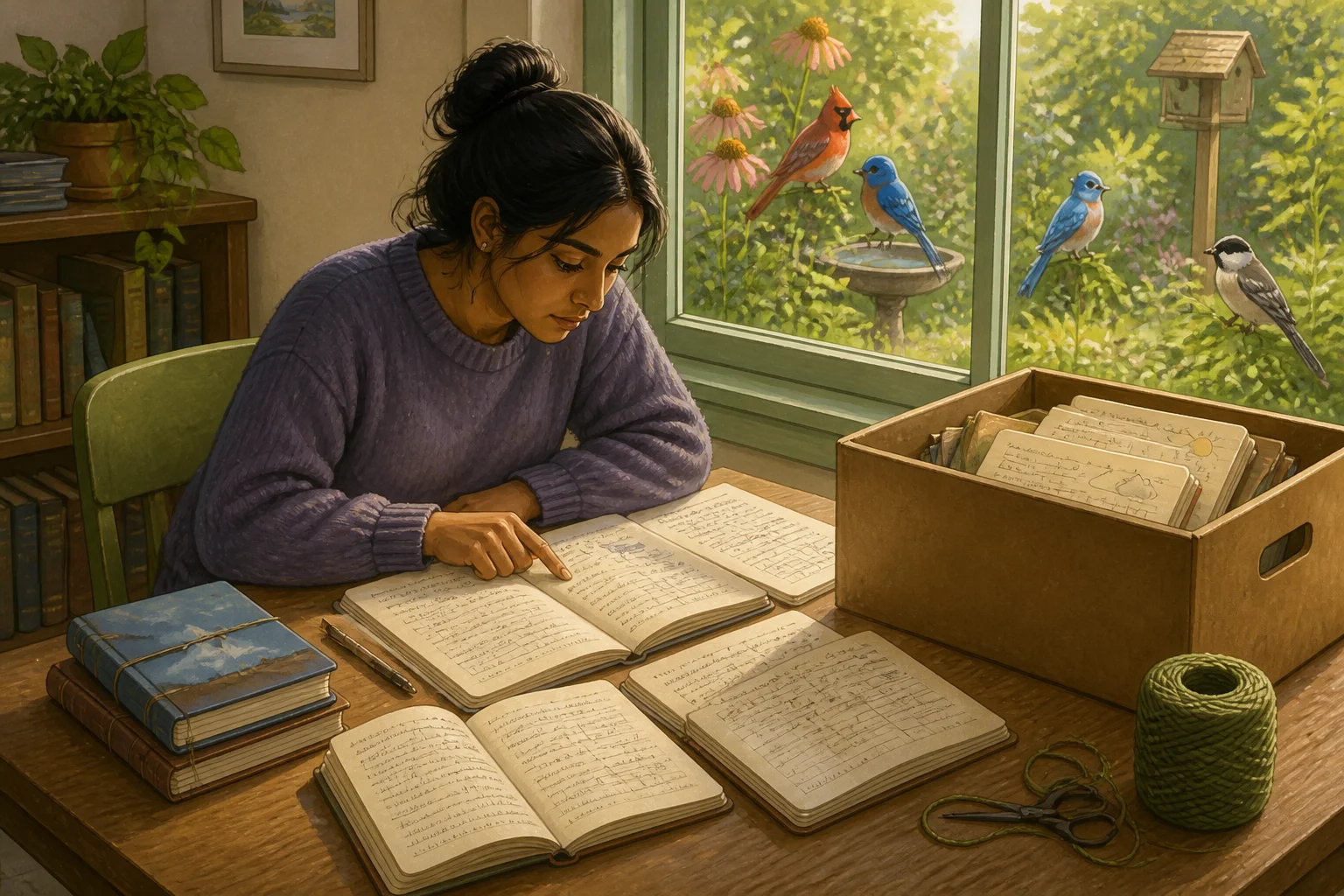
The notebooks arrived in a cardboard box, tied together with garden string. For thirty years, a retired teacher had recorded the weather beside the names of birds visiting her garden. A local researcher, Anika, hoped the entries might help her study changes in seasonal behaviour.
Some pages were remarkably precise. Others offered phrases such as "a cruel morning" or "warm enough to forgive November". Anika began by separating measurements from impressions. She wanted evidence she could compare, not a stranger's choice of adjectives.
Then she noticed a gap lasting nearly six months. When the entries resumed, their tone had changed. Birds were still counted, but each return seemed to receive more attention. A neighbour told Anika that the teacher's husband had died during the missing period.
It would have been easy to turn this discovery into an explanation for everything. Anika resisted. Grief did not tell her whether the garden had actually become quieter, and an emotional description did not make an observation false.
In her report, she used the dated sightings where they could be checked against other records. She described the gaps and uncertainties plainly. Separately, with the family's permission, she helped the local library display a selection of the notebooks.
At the opening, someone asked whether the display made the research less scientific. Anika pointed to the two different labels. One explained what the records could support. The other named the person who had kept noticing the garden.
She saw no need to make either label do the work of both.
تُضاف كلمات الفقرات التي تقضي وقتًا في قراءتها إلى الكلمات المُشاهَدة مرة لكل نص في اليوم بتوقيت UTC. هذا تقدير للتعرّض للكلمات وليس لفهمها.
اختبر فهمك
قصص خيالية أصلية أُعدّت بمساعدة الذكاء الاصطناعي. مستويات CEFR تقديرية.