
Light in the Deep Ocean
แตะคำเพื่อแปลและบันทึกไว้ฝึกฝน
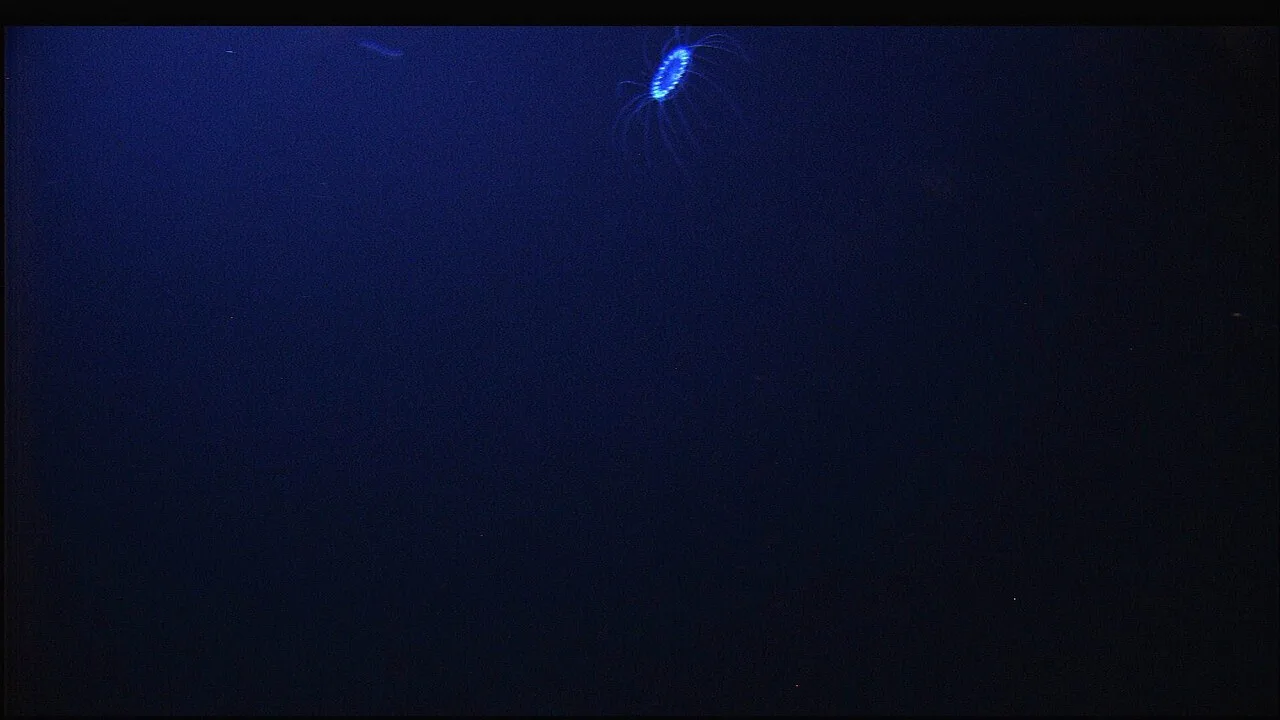
Beyond the ocean’s sunlit surface, darkness is not the same as an absence of signals. Many marine organisms produce light through chemical reactions, a process called bioluminescence. The light may be generated within an organism or in material it releases into the water.
There is no single explanation for every luminous display. Depending on the organism, light may help attract prey, discourage or confuse a predator, or communicate. For some species, the precise function remains uncertain. A glowing animal should therefore prompt a question about its circumstances, rather than an automatic assumption that the display has one universal purpose.
Depth changes the setting in which these signals operate. Sunlight fades through the twilight zone, roughly 200 to 1,000 metres below the surface. Deeper still, sunlight no longer reaches the water. Against that darkness, a small glow may stand out in a way it would not near the surface.
Bioluminescence should not be confused with biofluorescence. A fluorescent organism absorbs incoming light and emits it at a different colour, whereas a bioluminescent organism produces light through chemistry. Both can look spectacular in a photograph. Understanding the distinction requires asking where the energy for the visible light comes from.
คำในย่อหน้าที่คุณใช้เวลาอ่านจะถูกเพิ่มในคำที่เคยเห็น หนึ่งครั้งต่อข้อความต่อวัน UTC เป็นการประมาณการพบคำ ไม่ใช่ความเข้าใจ
แหล่งข้อมูลและภาพถ่าย
เขียนสำหรับผู้เรียนภาษาอังกฤษโดยอ้างอิงแหล่งข้อมูลด้านล่าง
ตรวจสอบล่าสุด:
ภาพถ่าย: IFE, URI-IAO, UW, Lost City Science Party; NOAA/OAR/OER; The Lost City 2005 Expedition. · Public domain · ปรับขนาดแล้ว ภาพย่อถูกครอบตัด

ตรวจสอบความเข้าใจ
บทความข้อเท็จจริงพร้อมแหล่งข้อมูล ระดับ CEFR เป็นค่าประมาณ